Sweden's Fika and the Beloved Kanelbulle
How Sweden built a whole ritual around coffee, cake and cinnamon, and why the humble kanelbulle earned its own national day on 4 October.
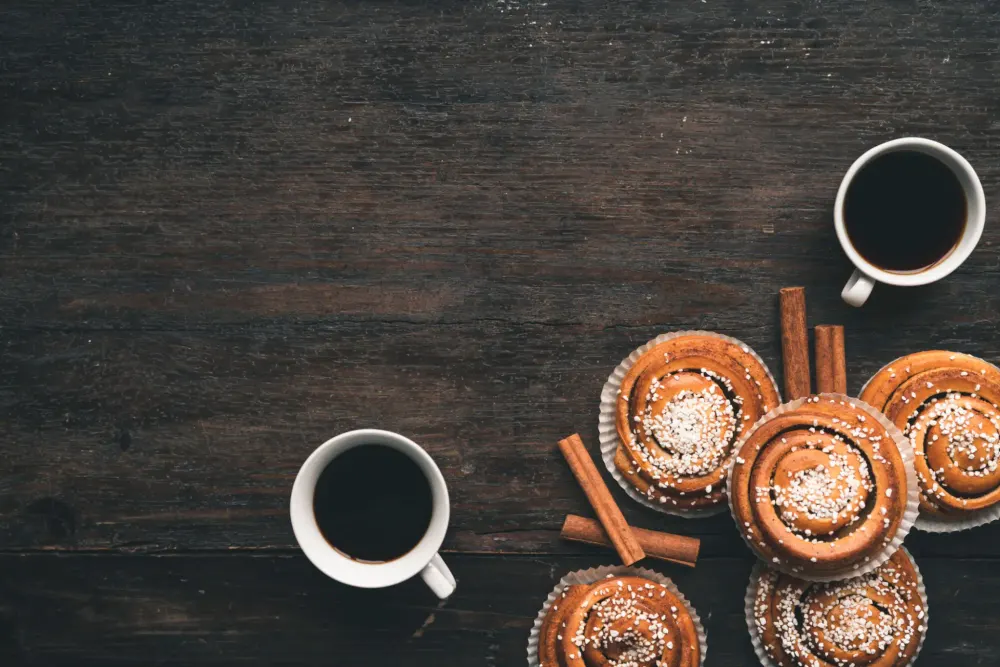
There is a Swedish word that does not really translate. Fika. It is a coffee, yes, but it is also the gathering around the coffee. People sit down together, share something sweet, and let time pause for a few unhurried minutes. Sweden takes this seriously enough that many workplaces build two fika breaks into the day. At the centre of the plate, more often than not, sits a cinnamon bun. Here is the small, lovely story of how a country fell for cinnamon in daily life.
Fika is the pause, not the drink
Fika is best understood as a moment to stop and connect, with the company and the conversation mattering more than the coffee itself (Visit Sweden). The word is a noun and a verb at once. You can have a fika, and you can fika with a friend.
The Swedes came to coffee early and never really let go. Coffee reached Sweden in the 17th century and, despite a few royal attempts to tax and even ban it, the habit stuck fast, so that Swedes now sit among the biggest coffee drinkers in the world (Perfect Daily Grind). The word fika itself is a playful flip of the old word for coffee, kaffe. As cafés and patisseries spread in the 19th and early 20th centuries, the drink gained a plate beside it, and the ritual as Swedes know it settled into place.
The kanelbulle, a national treasure
The classic partner to a fika is the kanelbulle, the Swedish cinnamon bun. It is not the towering, frosted thing you might picture. A proper kanelbulle is modest in size and gently sweet, made from a soft dough usually scented with cardamom as well as cinnamon, rolled and often knotted, then finished with crunchy pearl sugar rather than a blanket of icing (Visit Sweden). Swedes tend to prefer the balance of butter, spice and light dough over sheer sugar.
The bun as we know it is fairly modern. It took shape around the 1920s, once butter, sugar, flour and cinnamon were freely on the shelves again after the First World War, and it became a fixture in Swedish homes through the middle of the century (Cinnamon Roll Day, Wikipedia). It has been a companion to the coffee ever since.
A whole day for a bun
Few countries love a pastry enough to give it a date on the calendar. Sweden does. Kanelbullens dag, Cinnamon Bun Day, falls on 4 October, and it has been marked since 1999. It was the idea of Kaeth Gardestedt, working for Sweden’s Home Baking Council, which wanted to celebrate home baking and nudge people back to their own ovens. The date was chosen partly because it did not clash with any older feast day (Cinnamon Roll Day, Wikipedia).
What began as a marketing idea turned into something the whole country joins in. On the day, bakeries and homes turn out cinnamon buns by the million, and a good share of Swedes will eat at least one. It is a warm, unpretentious kind of national pride. There is no monument and no parade, just a spiced bun and a cup of coffee shared with someone.
Why Sweden’s habit is worth borrowing
There is something quietly wise in the Swedish approach. Cinnamon here is not saved for one grand bake a year. It is woven into the ordinary week, a little and often, in a bun small enough to enjoy without ceremony. That is exactly the way we like to think about it too.
It is also a nice case for choosing your cinnamon with care. A bun you might eat most weeks deserves a spice that stays gentle rather than sharp. True Ceylon cinnamon, Cinnamomum verum, is the sweeter, softer, more delicate one, and it is naturally very low in coumarin, the compound that is far higher in common cassia and is best kept modest (NCCIH, Healthline). For a swirl of filling that meets warm dough and cardamom, that fragrant gentleness is just right. It flatters the bun instead of shouting over it.
Bring a little fika home
You do not need to wait for October to keep a Swedish habit. Put the kettle on, drop a cinnamon stick into the pot, and sit down properly for ten minutes with someone. That is the whole art of it.
When you next roll a batch of buns, our true Ceylon cinnamon powder makes a soft, fragrant filling, and our Ceylon cinnamon sticks are lovely in the coffee beside it. Both are grown and hand-rolled on our family estate in Sri Lanka, never fumigated, and sold direct so the growers keep a fairer share. Slow down, share the plate, and let the cinnamon do the rest.
Sources: Visit Sweden: All about Swedish fika · Perfect Daily Grind: What is fika? · Cinnamon Roll Day (Kanelbullens dag), Wikipedia · NCCIH: Cinnamon · Healthline: Ceylon vs Cassia cinnamon
Taste the difference for yourself
Real Ceylon cinnamon, grown and hand-rolled on our family estate in Sri Lanka.
Shop the estate