Thomas DeLauer, 4M subscribers, said what about cinnamon in your morning coffee??
Thomas DeLauer has four million subscribers and a video saying a teaspoon in your morning coffee stops insulin resistance within minutes. Here is what the research supports, what it does not, and the one part we can tell you without hedging.
Somebody sent us a video this week. It runs for eleven minutes, it has been watched more than 330,000 times, and it comes from Thomas DeLauer, who has 4.04 million subscribers on YouTube. The title is 1 Teaspoon in Your Morning Coffee Stops Insulin Resistance (within minutes).
We sell cinnamon. A video like that is good for us, and that is the reason we went and checked it rather than sharing it.
This is general information and not medical advice. Cinnamon is not a treatment for diabetes or for insulin resistance, and it does not replace anything a doctor has prescribed. If you are managing your blood sugar, or you take medication for it, talk to them before changing anything.
What the research actually says
The National Center for Complementary and Integrative Health sits inside the National Institutes of Health, and it keeps a page on cinnamon. The wording there is blunt. “Research doesn’t clearly support using cinnamon for any health condition.” On this exact question it says “It’s unclear whether cinnamon supplementation is helpful for diabetes or weight loss” (NCCIH).
That is the position of the body most likely to know. Nothing in it supports stopping insulin resistance, and nothing we can find anywhere supports doing it within minutes.
Where the idea comes from
The interest is not invented, and it would be unfair to pretend it was. Trials have looked at cinnamon and fasting blood sugar, and some of the results are the kind researchers want to see. We went through them properly in cinnamon and blood sugar, sources and all.
What those studies are measuring is a modest change, over weeks of daily use, in people who were already being monitored. Even then the reviews disagree with each other. It is a long way from that to a spoonful in a cup this morning, and the distance between the two is where the headline was made.
The part we can tell you without hedging
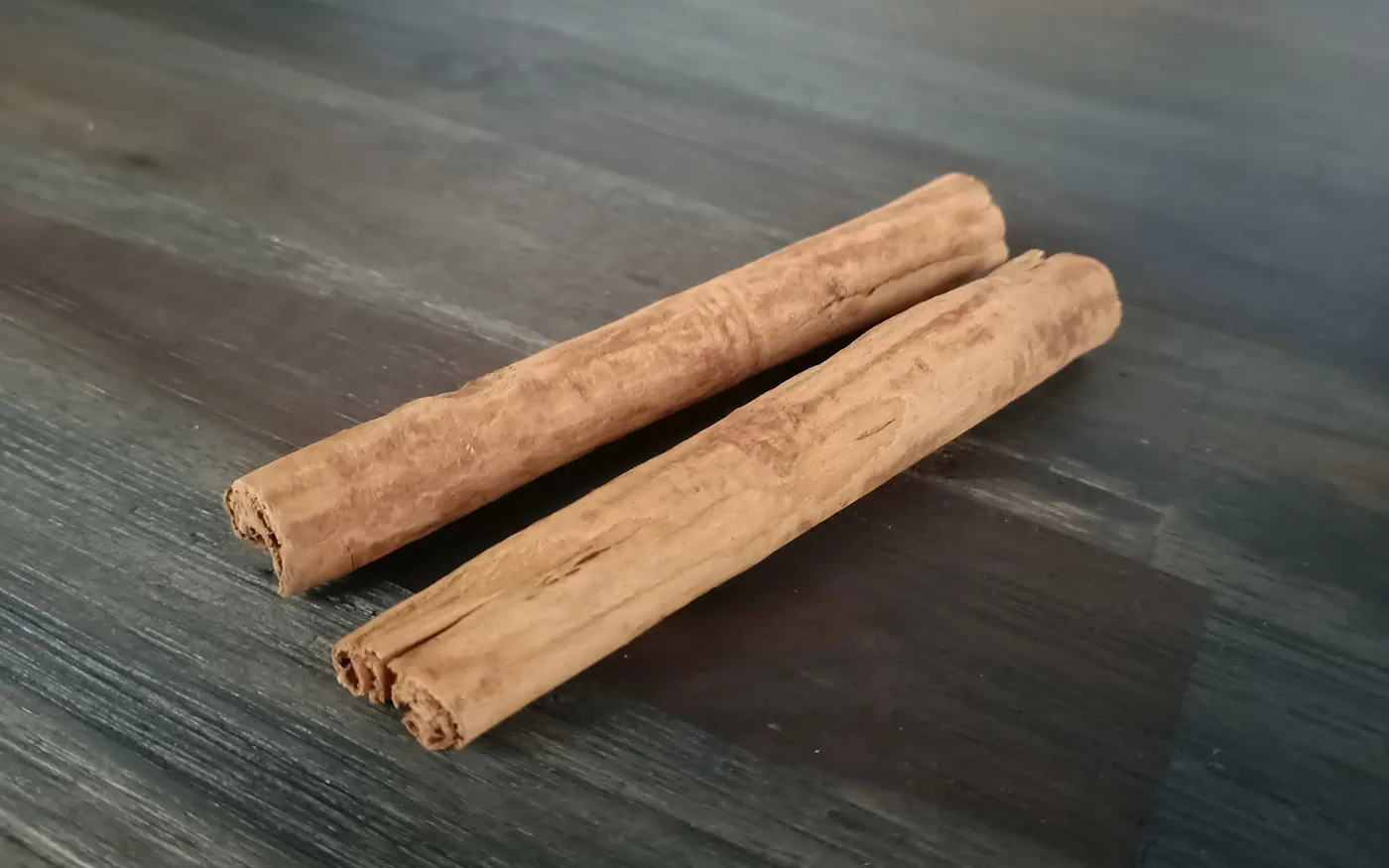
Here is what is solid. The same NCCIH page says cinnamon “is likely safe when consumed in the amounts commonly used in foods as a spice or flavoring agent”. So a stick in your coffee is a pleasant thing to do, and you do not need a study to justify it.
If you are going to do it every morning, the type in the jar starts to matter. Most supermarket cinnamon is cassia, and NCCIH notes that “interactions between coumarin, a chemical found in cassia cinnamon, and the liver have been reported”, and that prolonged use could be an issue for sensitive people. Of Ceylon cinnamon, the true cinnamon, the same page says it “may contain a trace amount of coumarin”.
That is the honest case for the spice we grow, and it is a smaller claim than the video makes. It is not that Ceylon cinnamon fixes anything. It is that Ceylon cinnamon is the one built for a daily habit.
How we use it at home
A stick dropped into the pot while the coffee brews, and left there. A spoon of powder stirred through porridge or yoghurt. A stick in the rice, which is the one most people have never tried and then keep doing.
Little and often, the way the family has used it for generations, because it makes an ordinary cup worth looking forward to.
Sources: NCCIH: Cinnamon - our own review of the blood sugar research
Taste the difference for yourself
Real Ceylon cinnamon, grown and hand-rolled on our family estate in Sri Lanka.
Shop the estate