What Gives Ceylon Cinnamon Its Aroma
The scent of Ceylon cinnamon lives in a tiny amount of oil hidden inside the bark. Here is what creates it, and why it smells gentler than cassia.
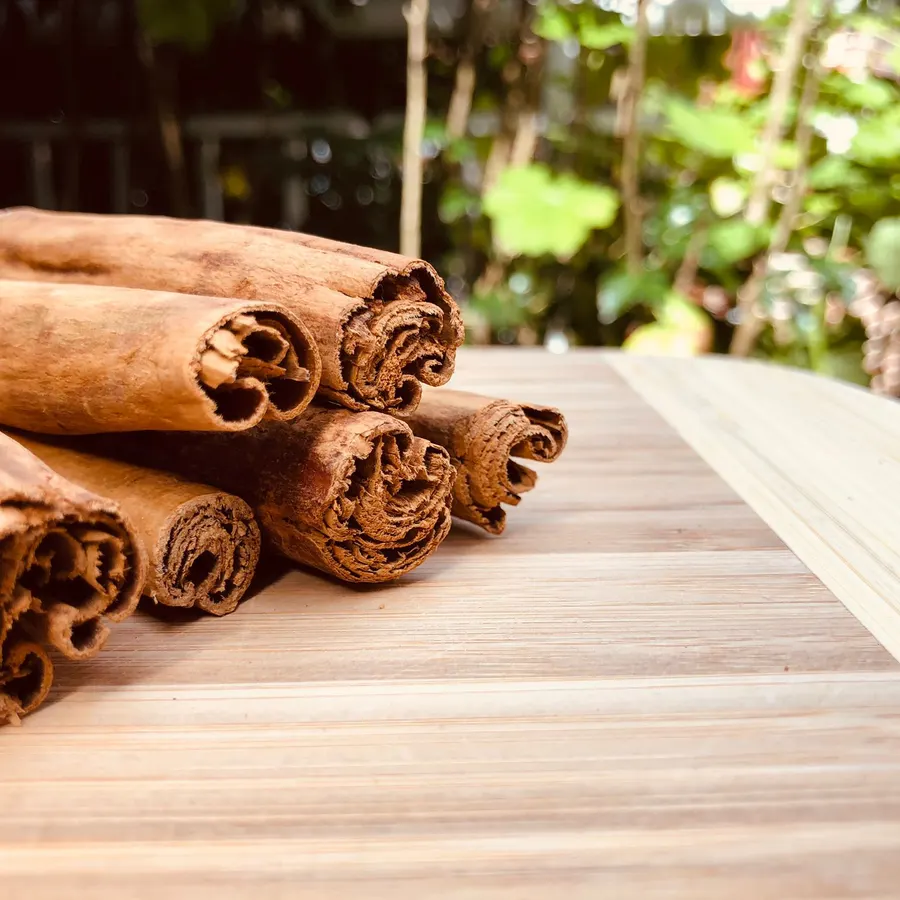
Open a fresh bag of Ceylon cinnamon and the smell reaches you before you have touched a thing. It is warm and sweet, a little woody, with a soft edge that lingers in the room. It feels almost alive. What you are meeting is not the wood of the bark at all, but the tiny amount of oil hidden inside it. Here is the honest, friendly story of where that aroma comes from, and why Ceylon cinnamon smells the way it does.
The scent lives in the oil, not the bark
Cinnamon bark is mostly ordinary plant material. The magic sits in a small fraction of it, the essential oil, which is a blend of light, volatile compounds tucked into the tissue of the bark. Volatile simply means these molecules evaporate easily at room temperature. They lift off into the air, drift to your nose, and that is the smell you notice. Cut, grind or gently warm the bark and you break open more of those little oil stores, which is why a freshly ground spoonful is so much louder than a stale one (ScienceDirect: Cinnamon Oil).
For the tree, this oil is a defence, a natural way to fend off fungi and insects. For us, it happens to be one of the most comforting smells in the kitchen.
Meet cinnamaldehyde, the lead note
One compound does most of the talking. It is called cinnamaldehyde, and in cinnamon bark oil it makes up the large majority of the mixture, commonly cited at around two thirds to four fifths (ScienceDirect: Cinnamon Oil). It is the molecule your brain has learned to read as “cinnamon.” Its shape lets it settle neatly onto the smell receptors in your nose, which is why even a trace of it registers instantly and unmistakably (Britannica: cinnamon).
But cinnamaldehyde does not work alone. Alongside it sit smaller amounts of other aromatic compounds. A little eugenol, the same molecule that gives cloves their warmth, works together with traces of linalool, which leans floral and citrusy, and several others besides (ScienceDirect: Cinnamon Oil). These supporting players are what turn a single sharp note into something rounded and layered. They are the difference between a smell that shouts and one that unfolds.
Why the smell arrives before the taste
There is a good reason the aroma greets you first. Smell and taste are two different senses. Your tongue only reads a handful of basic tastes, which are sweet, salty, sour, bitter and savoury. Almost everything else we call “flavour” is actually aroma, picked up by the nose (Wikipedia: retronasal smell).
Because the aroma molecules are volatile, they float through the air and reach the smell receptors high in your nose the moment the jar is open, long before any cinnamon touches your tongue. Then, when you do eat it, a second wave of the same molecules travels up the back of your throat into the nasal cavity from the inside. That is why a blocked nose makes food taste flat: lose the smell and you lose most of the flavour (Wikipedia: retronasal smell). So the smell is not just a preview of the taste. In a real sense it is most of the taste.
Freshness is everything
Here is the practical part. Because the aroma is carried by volatile oils, and volatile oils evaporate, cinnamon slowly loses its scent from the day it is ground. A whole quill holds onto its oils far longer than a powder, since less surface is exposed to the air. This is the simple case for keeping cinnamon as sticks and grinding a little when you need it, and for buying from somewhere that sells it fresh rather than after years in a warehouse. The nose test is the honest one, because if it smells faint it will taste faint.
How Ceylon cinnamon differs from cassia
Most supermarket cinnamon is cassia, a different tree. Cassia oil is very high in cinnamaldehyde and low in the softer supporting compounds, so it hits hard and hot, a bold single note (NCBI: cassia flavour compounds). Ceylon cinnamon, the true cinnamon, carries a little less cinnamaldehyde and a broader spread of those gentler aromatics, which is why it reads as more delicate, sweeter, and more complex, with that faint citrus lift rather than pure heat.
It is also worth knowing that the same tree gives two very different oils. The bark yields the classic sweet, spicy cinnamon scent led by cinnamaldehyde. The leaf yields an oil rich in eugenol instead, so it smells warm and clove-like rather than sweetly cinnamon (ScienceDirect: Cinnamon Oil). That is the difference you notice between our cinnamon bark oil and our cinnamon leaf oil: same plant, two distinct characters, set by which aromatic compound leads.
The short version
The aroma you love is a whisper of oil, led by cinnamaldehyde and softened by a handful of other compounds, reaching your nose before a crumb is on your tongue. Keep it whole and fresh, and it keeps that scent for far longer.
That is exactly why we sell ours the way we do. Our Ceylon cinnamon sticks are grown and hand-rolled on our family estate in Sri Lanka, never fumigated, and sold direct so the growers keep a fairer share, and so the oils are still in the bark when it reaches your kitchen. Open a bag, take a breath, and you will understand the whole of this piece in a second.
Sources: ScienceDirect: Cinnamon Oil overview · Britannica: cinnamon · Wikipedia: retronasal smell · NCBI: Compounds of Essential Oils from Cinnamomum cassia
Taste the difference for yourself
Real Ceylon cinnamon, grown and hand-rolled on our family estate in Sri Lanka.
Shop the estate