Ceylon Cinnamon vs Cassia: The Two Spices Sold Under One Name
Ceylon cinnamon vs cassia: both are sold as cinnamon, but they are different spices. Origins, flavour, coumarin, and which one to reach for every day.
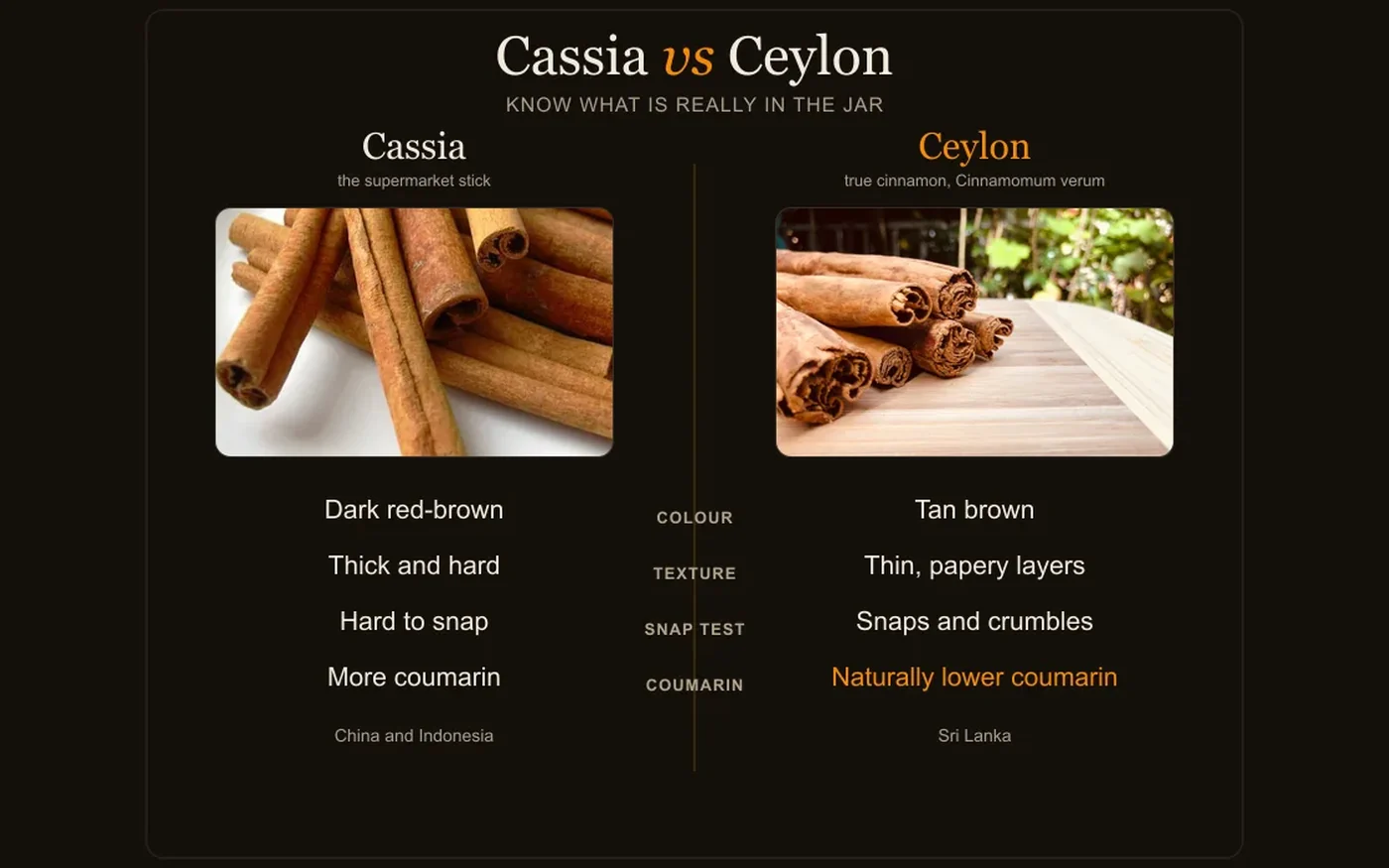
Both are labelled cinnamon, but they are two different spices with different flavours, different chemistry, and different best uses. Once you know how to tell them apart, you will never look at the spice aisle the same way. Here is the honest, friendly guide.
Two different trees
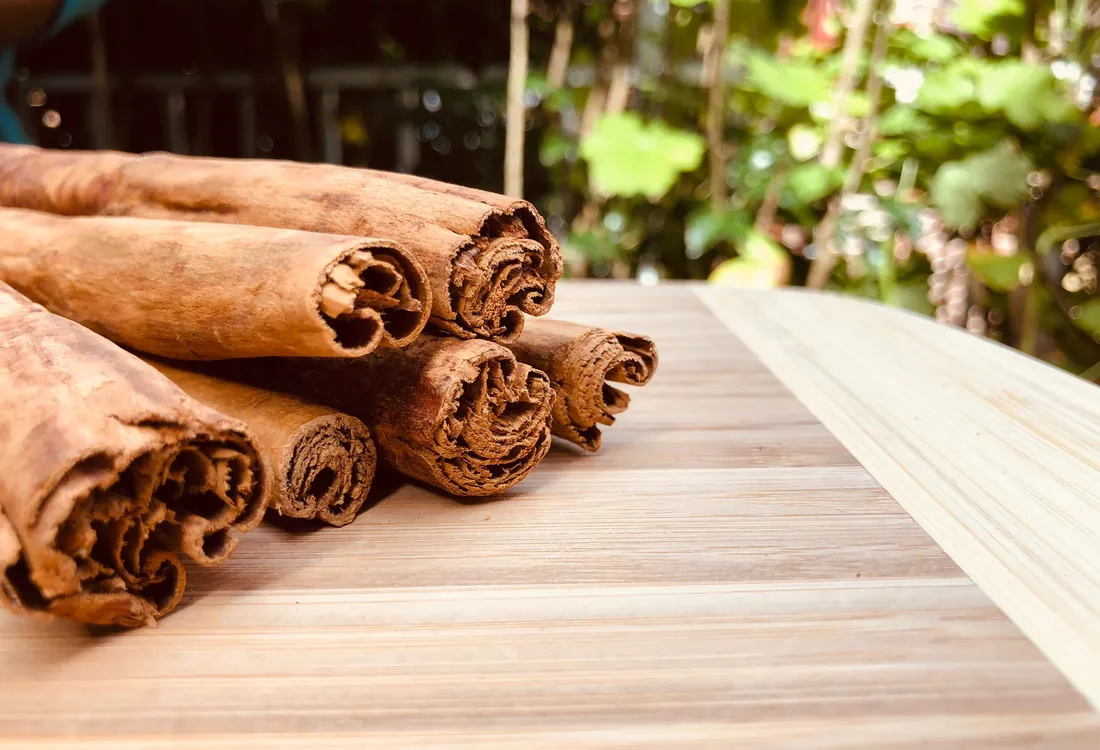
Ceylon cinnamon (Cinnamomum verum) is the true cinnamon, native to Sri Lanka. The quills are light tan, made of thin, papery layers rolled tightly together, and soft enough to crumble in your hand.
Cassia (Cinnamomum cassia) comes mostly from China and Indonesia. The sticks are darker, thicker, hard and hollow, almost impossible to snap by hand.
Same word on the label, genuinely different spices.
The flavour is where you notice it first
Ceylon cinnamon is delicate and mildly sweet, with a gentle, citrusy warmth that unfolds rather than shouts. It flatters lighter dishes, custards, apple, cream, vanilla, without taking over.
Cassia is bold, hot and punchy. It packs a strong single note, which suits robust, heavily spiced cooking where you want the cinnamon to be loud.
Neither is wrong. But if you have only ever tasted cassia, the first cup of Ceylon cinnamon infused tea is a small revelation.
Coumarin: the reason to choose Ceylon Cinnamon for daily use
Here is the practical difference that matters if you use cinnamon often. Coumarin is a natural compound found in cinnamon. In high amounts it has been linked to liver problems in sensitive people, and food-safety bodies set a tolerable daily intake for it. The two spices are very different here: cassia can be high in coumarin, while Ceylon cinnamon contains only trace amounts (Healthline, NCCIH).
That is the honest, well-supported case for Ceylon cinnamon. If you sprinkle cinnamon on your oats or brew it daily, the low-coumarin variety is simply the sensible one. Cassia is fine now and then, in smaller amounts. We look at the wider, hedged health research in Ceylon cinnamon benefits.
Quality and price
Ceylon cinnamon is the rarer, more painstaking spice. Every quill is peeled and hand-rolled, work that cannot be fully mechanised, so it costs more than a basic jar of cassia. Cassia is the cheap, widely available workhorse. The fair way to compare is price per gram, and buying in bulk direct from the grower is how true cinnamon becomes an everyday spice rather than a splurge. We show the maths in supermarket cinnamon vs Ceylon cinnamon.
So which should you buy?
For daily use, in your tea, coffee, porridge and everyday cooking, reach for Ceylon cinnamon: gentler, sweeter, low in coumarin, and made for often. Keep cassia around if you love a fiery cinnamon roll now and then. Most people, once they have Ceylon cinnamon in the cupboard, find they reach for it far more than they expected.
Our true Ceylon cinnamon sticks and powder are grown and hand-rolled on our family estate in Sri Lanka, never fumigated, and sold direct so the growers keep a fairer share. It is the true cinnamon, the way it is meant to taste.
Sources: Healthline: Ceylon cinnamon vs Cassia · NCCIH: Cinnamon
Taste the difference for yourself
Real Ceylon cinnamon, grown and hand-rolled on our family estate in Sri Lanka.
Shop the estate